
Bulimia face, bulima knuckles and bulimia bloat are some of the lesser known signs you can look out for in a loved one. Bulimia nervosa is an eating disorder often associated with bingeing and purging, but some of its common physical effects can be easily overlooked. So in this blog we look into some of the most frequently asked questions about these symptoms.
What is bulimia?
Bulimia nervosa is an eating disorder characterised by a cycle of bingeing/purging. What does this mean? Well there is a short period of excessive uncontrolled eating (eating really large amounts). This is followed by compensatory behaviours to try to “undo” the eating. For example people may make them selves vomit, misuse laxatives, diuretics, prescription stimulants or caffeine. They may fast or excessively exercise. This leads to people often feel trapped between a fear of gaining weight and overwhelming guilt or shame after eating. As a dietitian working with people trapped in this cycle I can tell you it’s not a nice place to be in.
For many people, the disorder exists in secret, hidden beneath layers of guilt, shame, and attempts to appear in control. Bulimia doesn’t always affect your body size, meaning you can look quite normal from the outside. It can go completely unnoticed by others, and even by the person themselves, who may not realise how deeply the disorder is affecting them. Bulimia can affect anyone, regardless of age, size, gender, or background.
While the symptoms discussed in this blog can feel overwhelming, it’s important to remember that bulimia can lead to serious medical complications, and reaching out for treatment and support is a vital step toward recovery.
Main Characteristics of Bulimia
While every person’s experience is unique, bulimia is generally defined by several key features. These include:
- Binge eating episodes, where a person eats large amounts of food within a small period and feels unable to stop.
- Compensatory behaviours such as vomiting, laxatives, fasting, or excessive exercise.
- Intense feelings of guilt, shame, or distress, particularly after binge eating.
- Preoccupation with weight, body shape, and food, often accompanied by strict rules or rituals around eating.
- Secrecy around behaviours such as hiding food, withdrawing during meals, or disappearing after meals.
- Feeling caught in an exhausting cycle that feels impossible to break, even when they desperately want to.
Understanding these common characteristics helps create a clearer picture of the disorder, but they are only part of the story. Bulimia affects the body in many subtle but serious and lesser-known ways, and recognising these symptoms can be important for early treatment and support.
In the next sections, we’ll explore some of the physical symptoma that are commonly overlooked.
Bulimia Face and other symptoms you may now know about:
Beyond the behaviours themselves, bulimia can affect the body in many ways; some of these symptoms are not as widely recognised as being linked to the disorder. These changes can feel confusing, alarming, or hard to know whether they “count” as symptoms. If this is you, you are not alone! Some develop slowly, others fluctuate from day to day, and many are dismissed as unrelated issues. Understanding them can bring clarity and reassurance.
Let’s look deeper
“Bulimia Face”
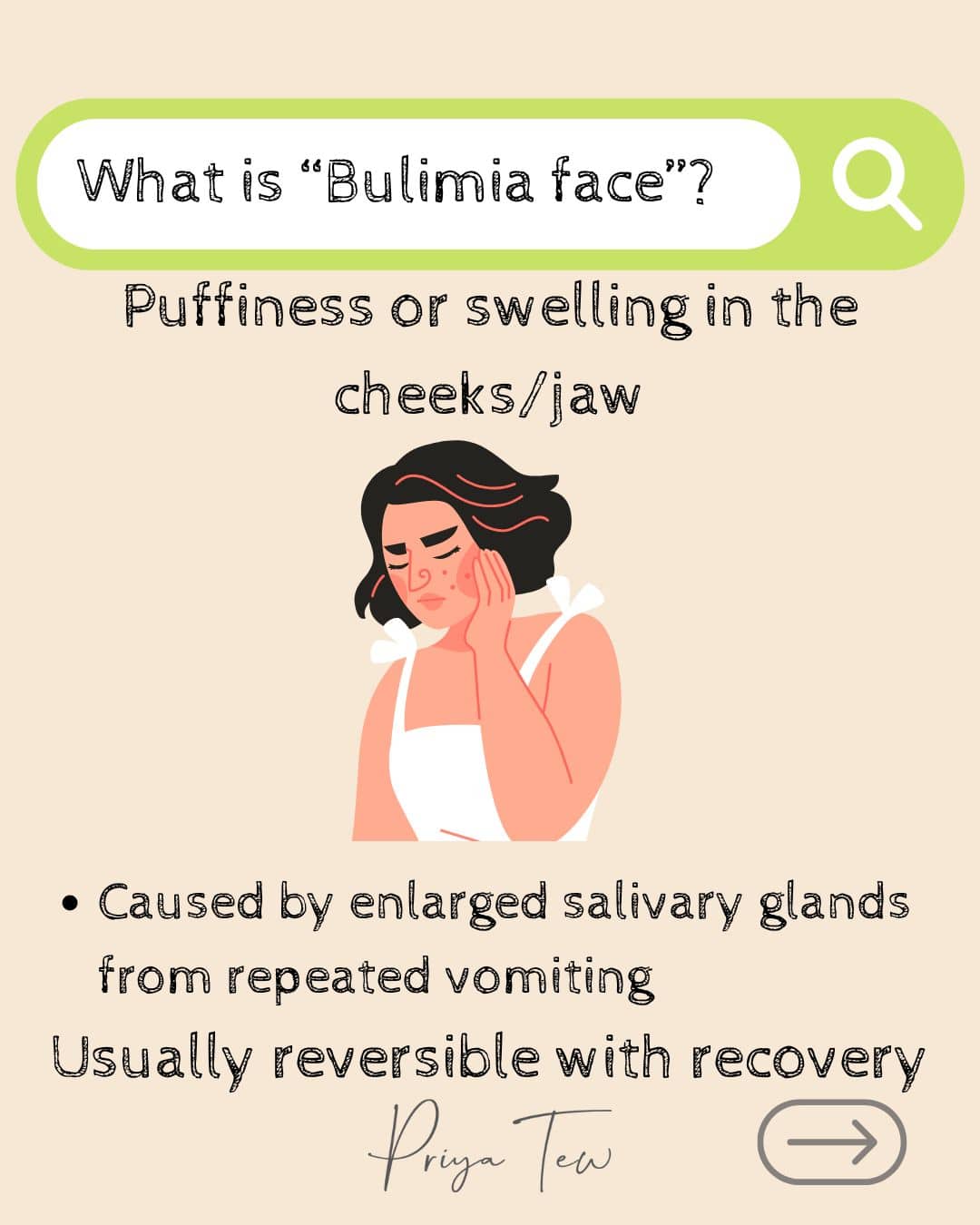
One of the most noticeable physical signs of bulimia can be bulimia face. Making yourself sick or self induced vomting is the culprit. Swelling around the cheeks and jawline is often due to swollen salivary glands which become enlargedt. This is most commonly the parotid glands, which sit just in front of the ears. This swelling, interestingly, often becomes most noticeable after purging stops for a few days. The exact cause isn’t fully understood, but it’s thought to be linked to changes in saliva flow and stimulation of the glands. The glands may enlarge to meet increased demand for saliva production, or because saliva backs up once vomiting stops. Over time, this can cause the glands to swell, creating roundness or puffiness sometimes referred to as “bulimia face” or “bulimia cheeks”, but it is usually painless.
For some people, this can worsen distress around body image. The good news is that once purging stops completely, the glands usually return to their normal size and function. If swelling continues or becomes severe, medical support may be needed.
“Bulimia Teeth”
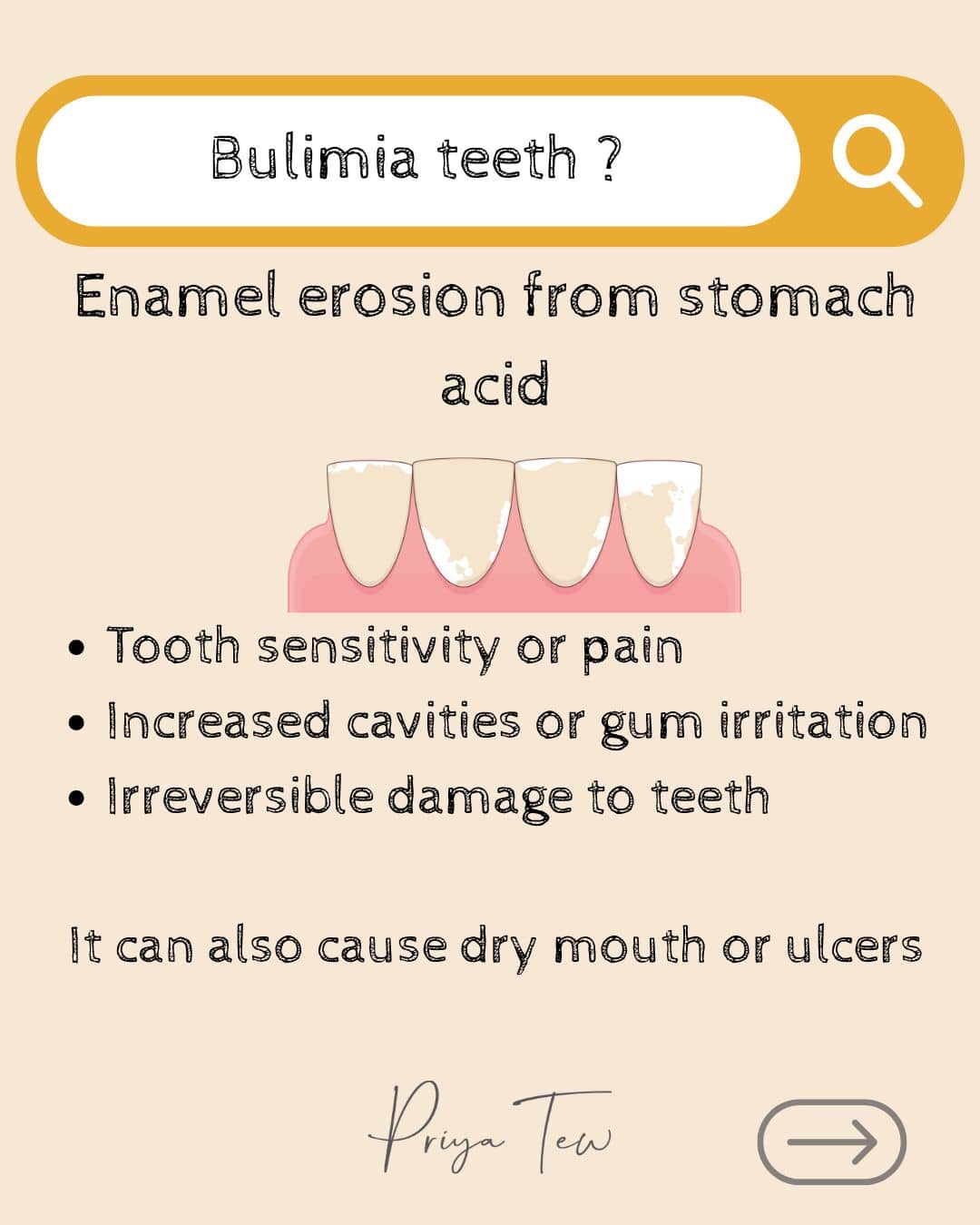
Another area of bulimia face deeply affected by purging is the teeth and mouth. Stomach acid is highly corrosive and can gradually wear down tooth enamel, leaving teeth more sensitive, brittle, and prone to cavities. Because enamel cannot regenerate, this damage is largely irreversible. Many people also notice dry mouth, increased sensitivity, or small mouth ulcers without realising these symptoms are linked to purging.
“Bulimia Eyes”
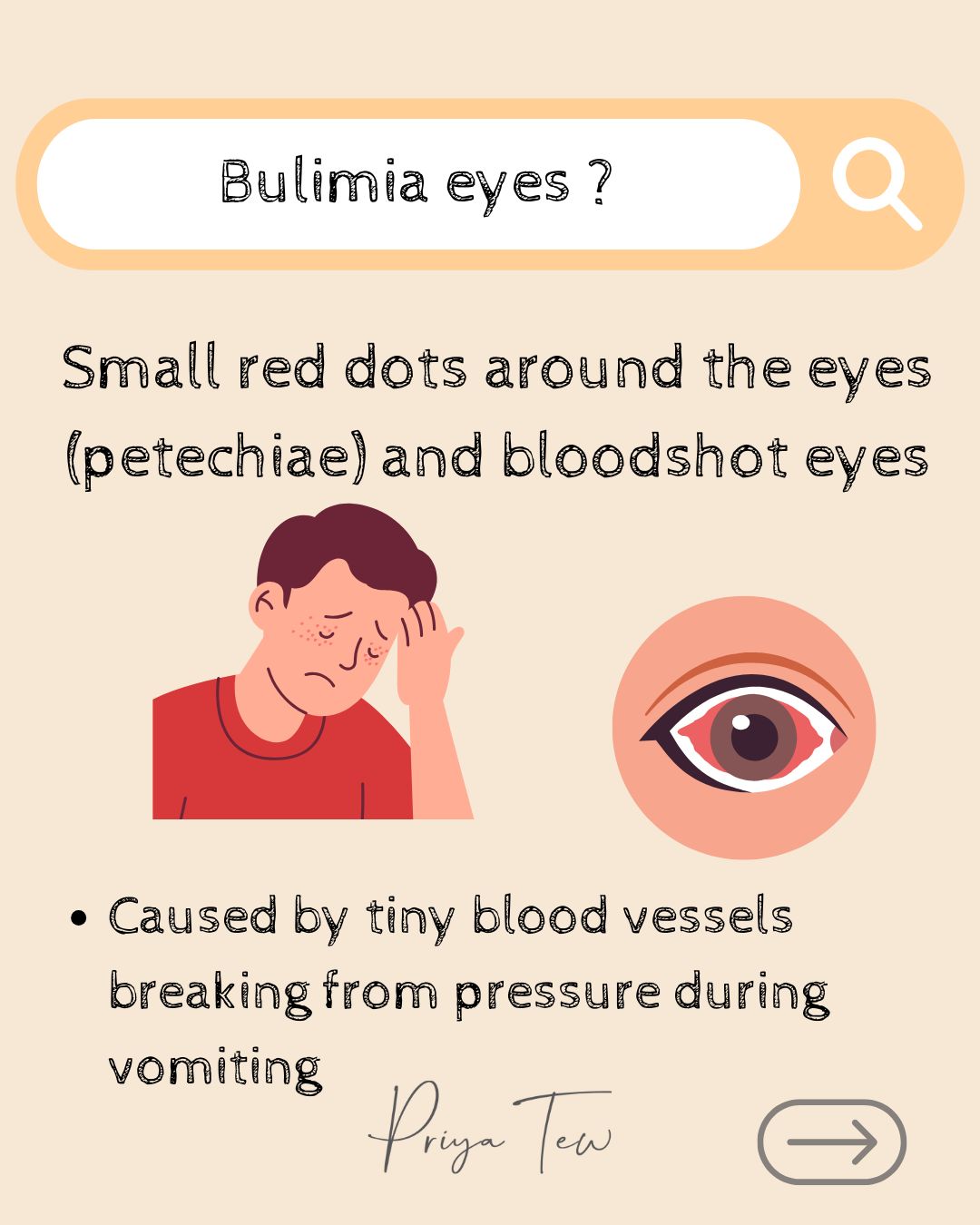
Bulimia face can also affect the eyes. Some people notice small red dots around the eyes or face, known as petechiae. These occur when tiny blood vessels under the skin rupture due to sudden increases in pressure, which can happen during forceful vomiting. Recurrent and forceful vomiting can also cause nosebleeds or subconjunctival haemorrhages (or a burst blood vessel in the eye).
“Bulimia Bloat elsewhere in the body”
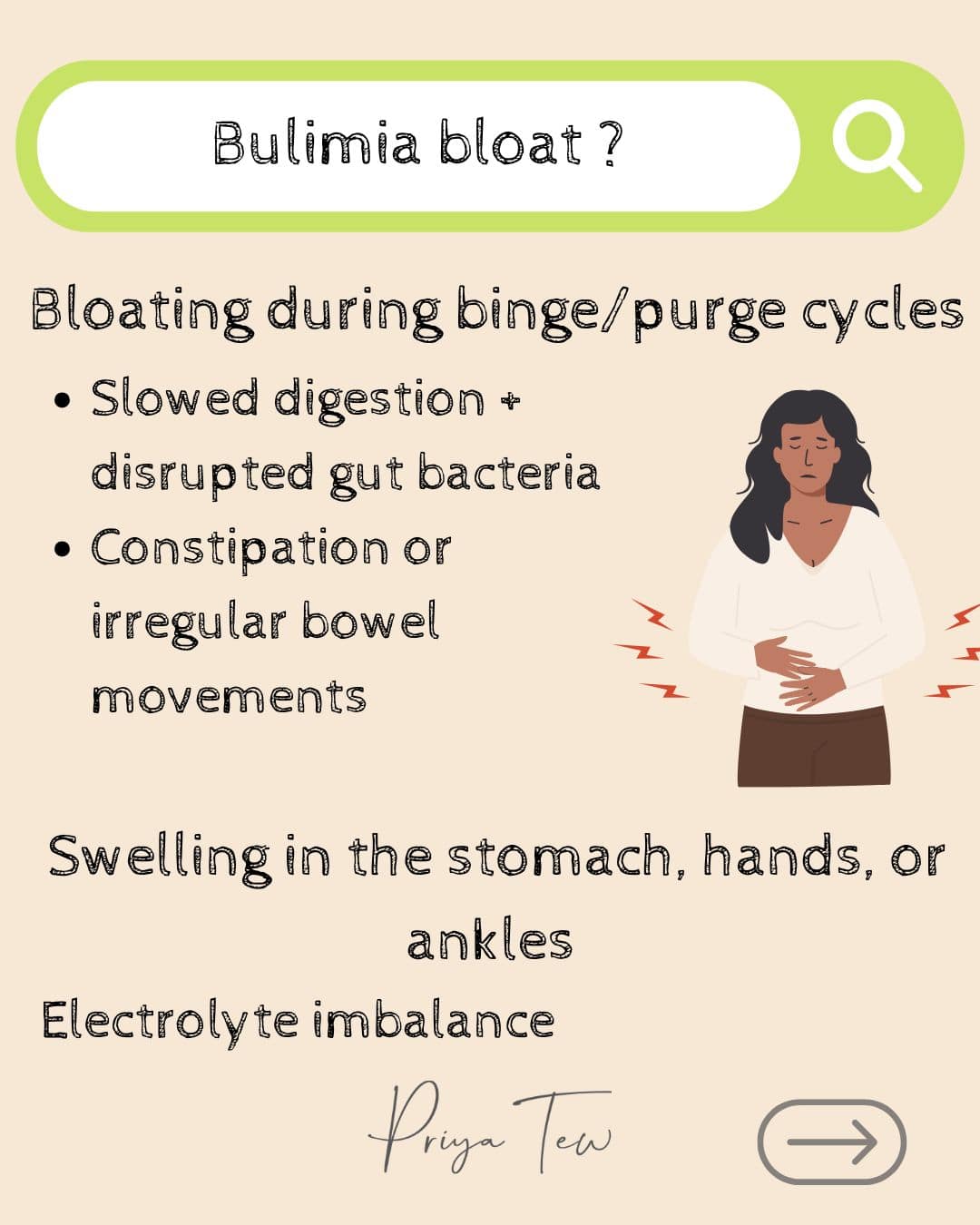
Of course bulimia face symptoms are not the only ones and bulimia can lead to many different symptoms. Such as swelling of body parts or oedema, and digestive changes. Swelling in hands, feet, or ankles or elsewhere in the body
This swelling can be a result of electrolyte imbalances due to the vomiting or laxative and diuretic misuse. It can lead to changes in sodium and potassium. This can cause temporary swelling in the extremities. Which can be uncomfortable and may appear suddenly. Water loss as a result of purging can cause the body to release hormones that signal to hold onto as much water and minerals as possible. This is a survival response.
People may also experience dizziness, fainting spells, or irregular heartbeats when electrolytes fall too low; these symptoms should always be taken seriously.
Severe bloating can occur during binge/purge cycles or during early recovery. Changes in gut motility, disturbances in the gut microbiome, and the physical fullness from binge episodes can all contribute.
Here are some tips that may help ease bloating and discomfort
“Bulimia fingers/hands”

Some individuals who self-induce vomiting may develop calluses or dry, irritated skin on the fingers or knuckles. This can be known as Russells signs and it happens when the skin repeatedly rubs against the teeth during attempts to trigger vomiting, leading to friction-related irritation.
Menstrual / Hormonal Symptoms
Changes in nutrition, weight, stress, and hormone production can lead to disruptions in the menstrual cycle. This may include irregular periods, absent periods, worsened PMS, infertility changes, fatigue, or mood swings. These symptoms often improve once the body receives regular nourishment and stabilises hormonally.
What to Eat to Get My Period Back.
Take Home Message
We explored what bulimia is, including bulimia face. We talked about how the binge–purge cycle affects both physical and emotional health. We highlighted symptoms that are often overlooked or misunderstood, changes in the face, teeth, eyes, hair, swelling, hormones, and skin. Each of these signs reflects the body’s attempt to cope under strain, reminding us that the effects of bulimia extend far beyond food or weight alone.
While there are small things that may help ease certain symptoms, they should never replace real treatment, support, or medical care.
The physical signs described are not flaws or failures; they are messages from a body doing its best to survive.
Bulimia is not a choice, and these symptoms are not caused by a lack of strength or willpower. You do not have to manage them alone. Recovery is absolutely possible, and every step toward stability matters, even if it feels slow or imperfect.
You deserve help, support, and a life free from the exhaustion of the binge–purge cycle.
References
- Bulimia nervosa [Internet]. NHS inform. [cited 2025 Dec 4]. Available from:https://www.nhsinform.scot/illnesses-and-conditions/mental-health/eating-disorders/bulimia-nervosa/
- Medical complications of bulimia nervosa | Cleveland Clinic Journal of Medicine [Internet]. [cited 2025 Dec 4]. Available from: https://www.ccjm.org/content/88/6/333