
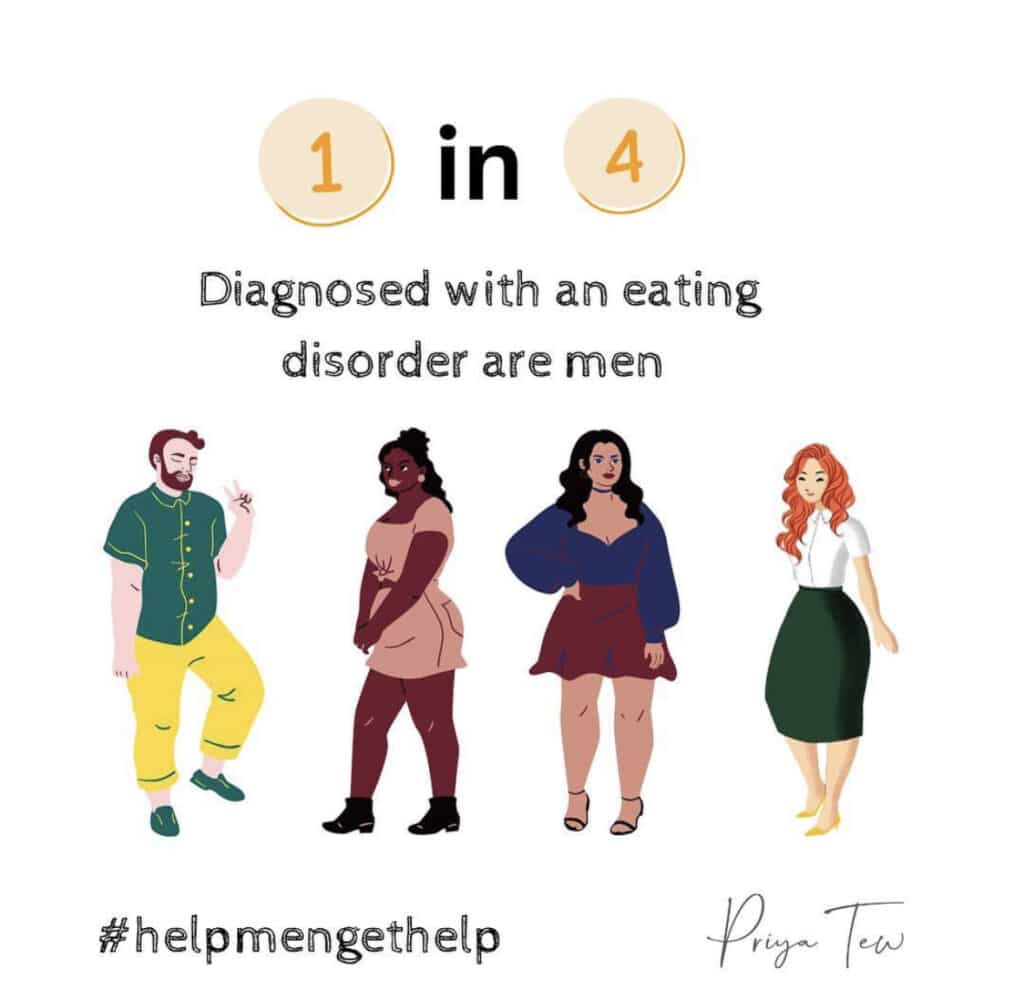
Eating disorders in men, it happens.
Eating disorders in men can be a topic that is completely overlooked. However, 1 in 4 people with an eating disorder identify as male.
Eating disorders in men, it happens. Read More »
Eating disorders in men can be a topic that is completely overlooked. However, 1 in 4 people with an eating disorder identify as male.
Eating disorders in men, it happens. Read More »
The Food Police are influences that try to enforce food rules and behaviours that originate in diet culture, dietitian Priya Tew explains.
Challenging the Food Police Read More »
Boredom eating and emotional eating are tricky areas to navigate, read on for top tips on how to deal with this.
How to stop boredom eating Read More »
Atypical anorexia is a commonly used diagnosis, in fact often more common than anorexia nervosa. However the wording atypical is not helpful.
Atypical anorexia – what is it? Read More »
Extreme hunger in eating disorder recovery is something that is common and very unsettling. When you are working on regulating your eating, the last thing you want is feelings of being hungry all the time….
Why do I feel extreme hunger? Read More »
Christmas mental health survival guide At Christmas, along many other holidays, your mental health can suffer, so here is our christmas mental health survival guide. There is often a strong emphasis on food as a way of celebrating with family and friends. If you are suffering with, or recovering from an eating disorder, this can be
Looking after you mental health at Christmas, a survival guide Read More »
Recovery from an eating disorder isn’t as simple as aiming for a set calorie amount. Hypermetabolism in eating disorders is when the metabolism overshoots.
Hypermetabolism in eating disorders Read More »
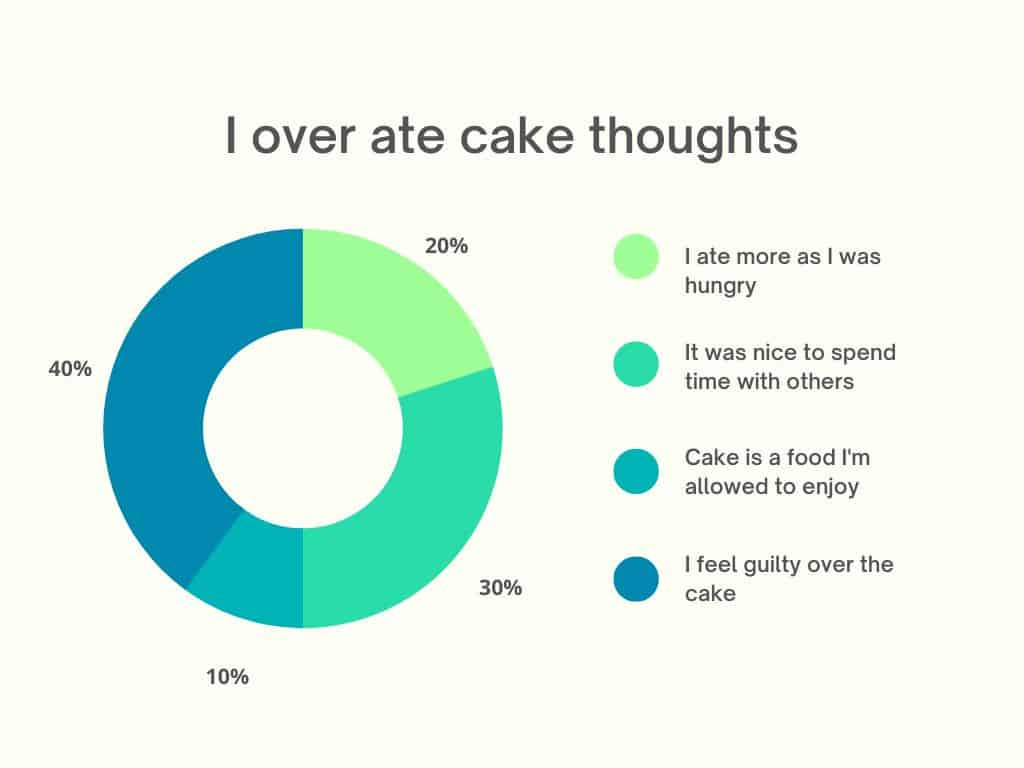
How to challenge unhelpful beliefs using the pie chart technique. Sometimes we all have unhelpful thoughts, in eating disorder recovery these can often be related to food.
Challenging unhelpful thinking styles around food Read More »
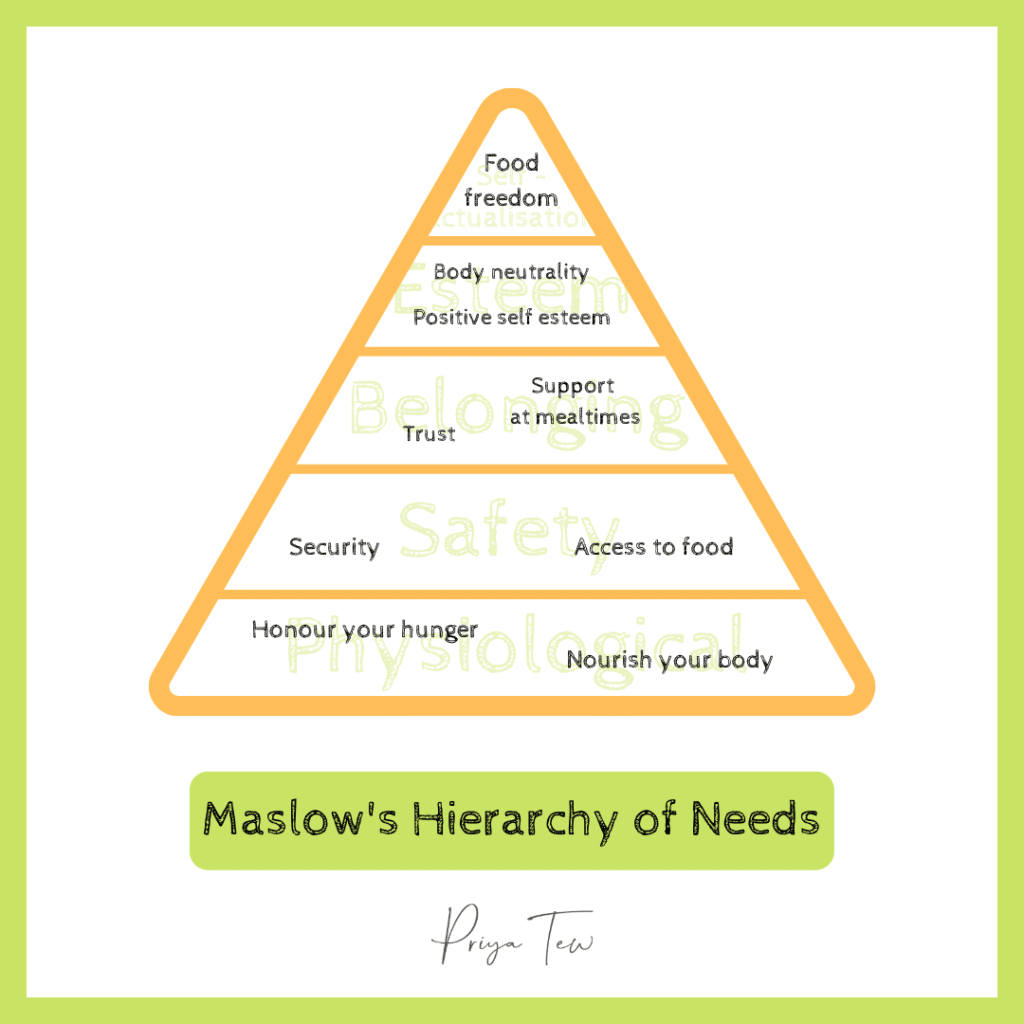
Maslow’s Hierarchy of Needs is a theory that we need to meet our basic needs before we can move on to more advanced ones. It was first published in the 1943 paper “A Theory of Human Motivation”. The 5 needs from the original paper are: Maslow’s Hierarchy and eating disorders We can use Maslow’s Hierarchy
Maslow’s Hierarchy of Needs and Eating Disorders Read More »
Counting calories may seem like a straight-forward way to lose weight. However, it can miss out on the nuance of nutrition, and impact your relationship with food. It may suprise you but as a dietitian I don’t actually recommend my clients count calories or track their macros. Here is why…
Why counting calories is not a good idea Read More »