
Binge eating relapse can feel so shameful, so hidden. And if you’re reading this after a relapse, I want you to know right now that you are not alone. I work with so many people who struggle with exactly this, people from all walks of life, including health professionals, parents, high achievers, people who look absolutely fine from the outside and are quietly struggling on the inside.
There should be no guilt here. I know how hard it can be to even admit that there’s a problem, let alone to start making change. But I also see, every single week in my clinic, people making lasting change. Real, meaningful change that genuinely transforms their relationship with food and with themselves.
A real story…
I’m thinking right now of a lady I worked with who was a health professional herself. Every day after lunch, she would binge and the distress it was causing her was enormous. We didn’t try to overhaul everything at once. We started by focusing on stopping just one binge. We looked at her triggers. We created a new routine around that one vulnerable moment. Slowly, we went from stopping one binge a week, to two, to eventually all of them. That kind of change is possible. I’ve seen it happen again and again.
So if you’ve had a relapse, please hear this: you are not broken, and this is not the end of your progress.
In this blog, we’ll explore why binge eating relapses happen, and how you can make lasting change in a kind, compassionate way.
You Are Not Back At Square One
One of the hardest parts of a binge eating relapse is the belief that everything has been undone, especially if things had been going well for a while. Many people describe feeling like they need to “start over” or that all of their progress has been undone in one moment. This can be really disheartening, especially when you have made such a lot of effort into trying to make change. I hear you if you are someone who has gone around and around the cycle.
What I see time and time again is that recovery is not a straight line. Most people experience big ups and downs as they learn to rebuild their relationship with food. One setback does not mean that you have failed or lost everything you have worked towards. You are never starting from the starting line all over again.
In fact, relapse can be helpful! It can highlight areas where more support, structure, or flexibility is needed. Rather than being a step backwards, how about we see it as part of the learning process that helps your long-term recovery become more stable.
Why Binge Eating Relapse Happen
Binge eating relapse rarely happens without a reason. It is usually the result of a combination of physical, emotional, and behavioural factors all coming together.
One of the most common triggers I see in people is restriction. This might be intentional dieting, skipping meals, missing out food groups like carbs or simply not eating enough throughout the day. When the body is under-fuelled, it can increase cravings and make binge eating more likely later on.
Stress and emotional overload also play a significant role. Food can become a coping mechanism when you feel overwhelmed. We’ve all been there! It isn’t always a bad thing either, but it is important to have other ways of managing emotions as well.
Thinking styles are a less talked about trigger. Thoughts like “I’ve already messed up today, so I might as well keep going” or “Today is just a bad diet let’s write it off” can quickly turn a small slip into a larger relapse that feels unmanageable.
Let’s not forget that changes in routine that you may not be able to change, such as busy work periods, travel, poor sleep, or social disruption. These can also make it harder to maintain regular eating patterns. So you can see there are so many factors and one of the big keys here is to really work out what the triggers are for you. Take that relapse and turn it into a learning moment. Relapse is usually a response to unmet physical or emotional needs, not a lack of willpower.
What To Do After A Binge Eating Relapse
The most important thing to do first is to avoid compensating for the binge. Restricting food, overexercising, or trying to “undo” what happened can increase the likelihood of further binge eating. I know it can feel like the right thing to do, but I promise long term it isn’t.
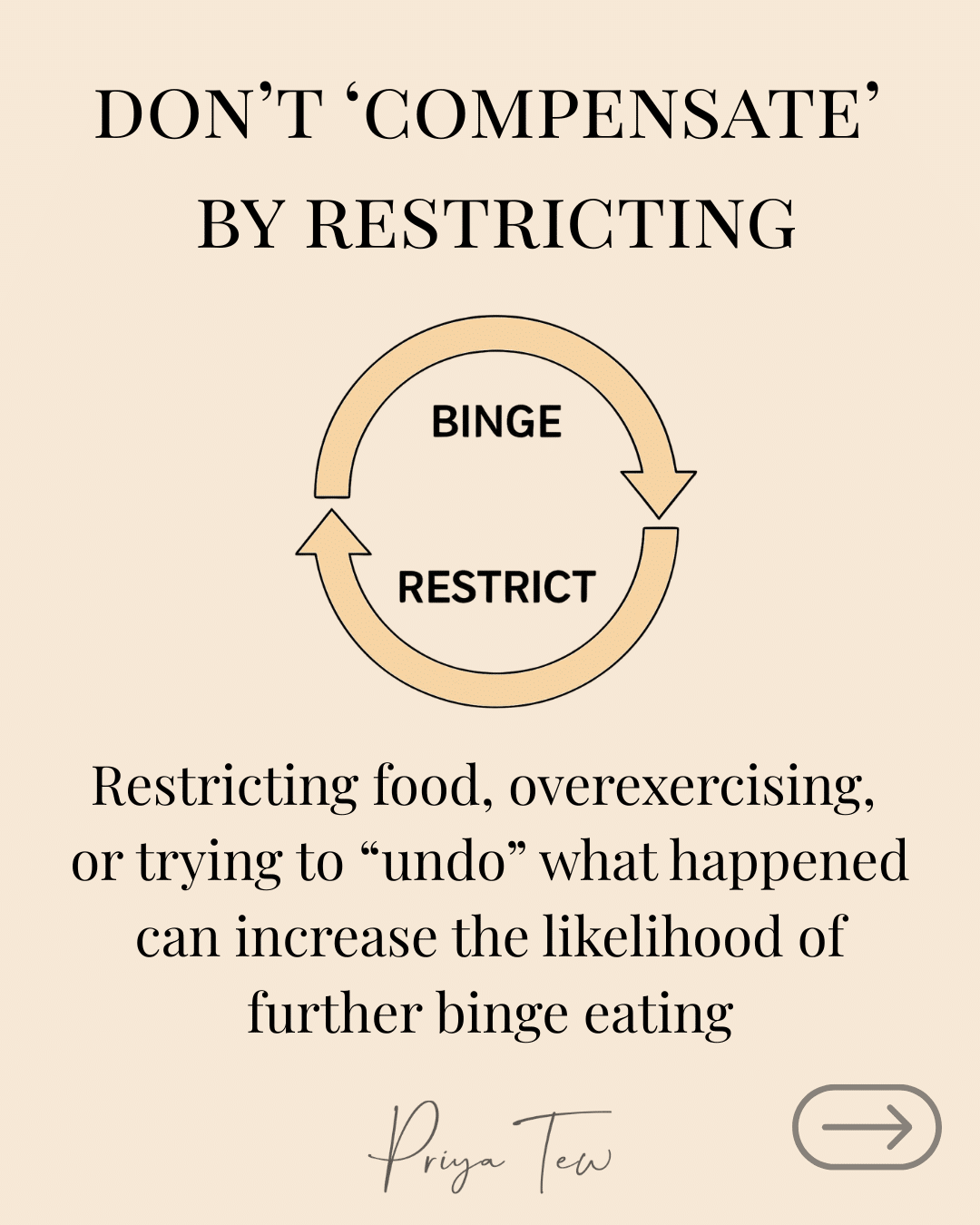
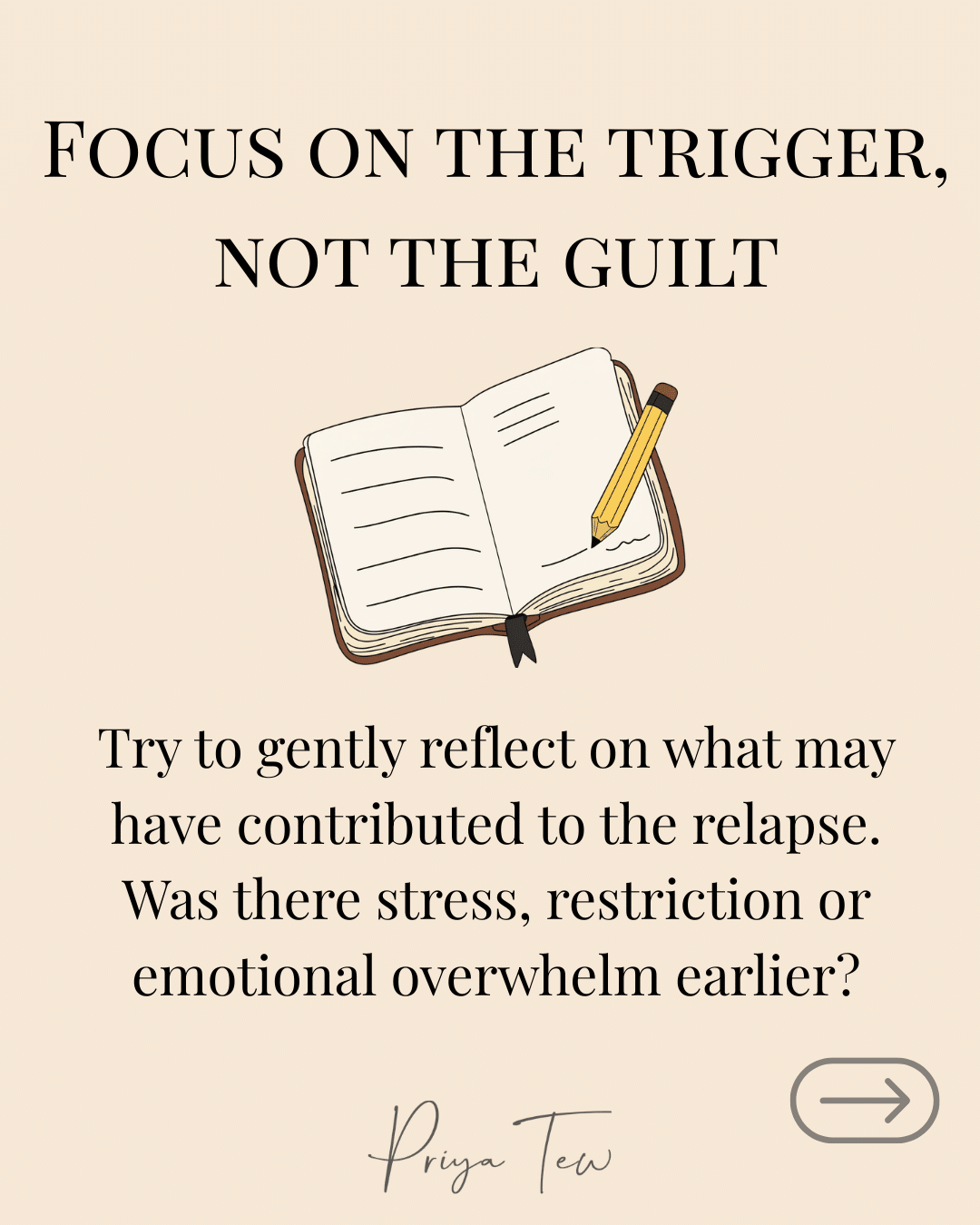
Instead, try to return to your usual eating routine as soon as you can, rather than skipping meals or waiting to “start again” another day. Instead of focusing on guilt, try to gently reflect on what may have contributed to the relapse. Was there stress, restriction earlier in the day, or emotional overwhelm? This is not about blame, but about understanding patterns. Once you understand those it can be a game changer. Think about what you need in place for next time.
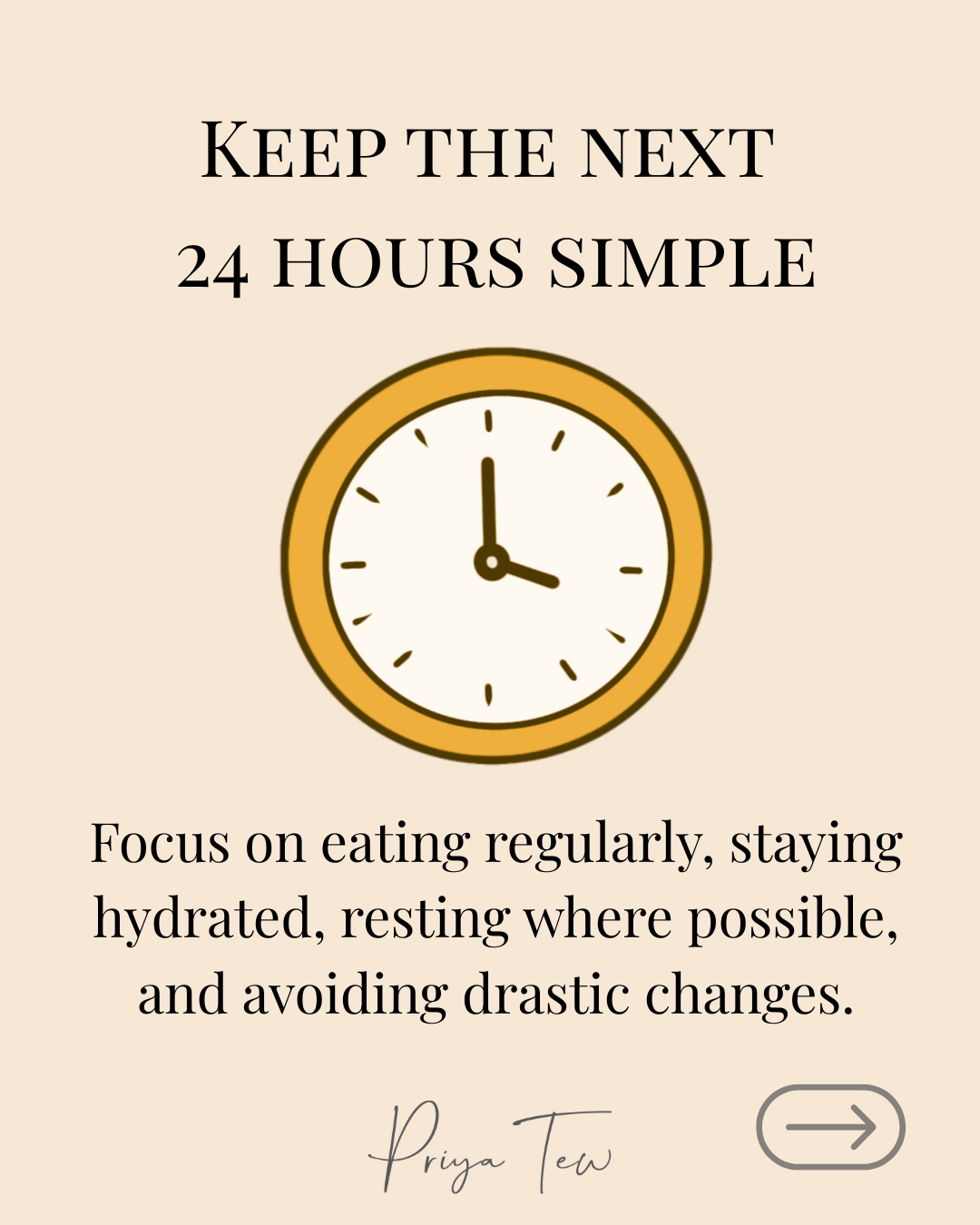
Then keep the next 24 hours simple. Focus on eating regularly, keeping meals balanced, staying hydrated, moving in ways that feels good and not punishing, resting enough and avoiding drastic changes. Most of all – be kind to yourself. If you need help with knowing how to structure your eating then you can grab my FREE guide to binge free eating here
Having Self-Compassion Matters
For many people, the hardest part of a binge eating relapse is not the eating itself, but what happens afterwards in their mind. Self compassion is one of the biggest keys but can be so hard to implement. This is something I’m always working with my clients on.
You may have thoughts like “I’ve ruined everything,” “I should know better,” or “I have no control”. Unfortunately, these thoughts often make it harder to recover, as they increase shame and the urge to either restrict or continue the cycle.
When we respond with self-criticism, we are more likely to feel overwhelmed and stuck. This can unintentionally keep the binge-restrict cycle going. Research has shown that greater self-compassion led to faster decreases in shame and improvements in eating disorder symptoms.
Self-compassion does not mean ignoring what has happened. It means responding to yourself in a calmer and more supportive way so that recovery can continue. Read my blog post on affirmations for more ways to drive self compassion.
This might look like speaking to yourself as you would a friend. You would not tell a friend they have failed after one setback. It might also involve replacing blame with curiosity, such as asking, “What was going on for me before this happened?”
Long-term recovery is usually shaped by small, repeated actions rather than perfect days. Being hard on yourself may feel motivating in the moment, but in binge eating recovery it often keeps the cycle going. Compassion creates more room for change than criticism ever will.
Rebuilding Trust Around Food After a Relapse
After a binge eating relapse, it can be tempting to swing between extremes, either trying to regain strict control around food or giving up completely. But recovery is usually supported by small, consistent habits rather than dramatic changes.
Building predictable, regular meal patterns throughout the day can help reduce extreme hunger, stabilise energy levels, and make urges to binge feel more manageable over time. Even if your appetite feels off after a binge, your body still needs nourishment.
Reducing long gaps without food is also important. Skipping meals often increases physical and mental hunger later in the day, which can make binge eating more likely. Predictable eating patterns help rebuild trust with your body and create a greater sense of stability around food.
It can also help to challenge black-and-white thinking around eating. Labelling foods as “good” or “bad” often increases guilt and can reinforce the binge-restrict cycle. Allowing flexibility within a balanced eating pattern is usually more supportive than trying to eat perfectly.
For some people, body checking behaviours such as repeatedly weighing themselves, checking their body in the mirror, or focusing on physical discomfort after eating can increase shame and anxiety. Taking a step back from these habits can help shift the focus away from punishment and back towards self-care.
Building supportive routines around difficult times of day can also make a difference. If evenings tend to feel more vulnerable, creating calming habits that are not centred around food, such as reading, having a hot drink, or speaking to someone supportive, may help reduce the intensity of urges over time.
Recovery is not about controlling food perfectly. It is about creating steadiness, flexibility, and trust around eating again.
Your body needs consistency and nourishment after a relapse, not punishment.
When Extra Support Can Help
If binge eating episodes are becoming more frequent, feel distressing, or you are finding it difficult to return to regular eating patterns, it may be helpful to seek additional support.
Working with a specialist dietitian or therapist can help you explore triggers, rebuild structure around eating, and develop more supportive coping strategies. I offer my specialist support to work on just this either 1-1 or via the Recovery Tribe. Or you can also grab a copy of my How to Manage Binge Eating Workbook here
A binge eating relapse is a common part of recovery and does not mean that you have failed or gone backwards. While it can feel discouraging, it is often a sign that something needs more support, not that recovery is not working. Recovery is not about never slipping up. It is about learning how to respond differently each time.
Remember, you do not have to wait until things feel “bad enough” to get help. Support can be useful at any stage of recovery.
References
- Bremer, M., Garnweidner-Holme, L., Nesse, L. and Molin, M. (2023). Experiences of living with binge eating disorder and facilitators of recovery processes: a qualitative study. Journal of eating disorders, 11(1). doi:https://doi.org/10.1186/s40337-023-00929-2.
- da Luz, F.Q., Mohsin, M., Jana, T.A., Marinho, L.S., Santos, E. dos, Lobo, I., Pascoareli, L., Gaeta, T., Ferrari, S., Teixeira, P.C., Cordás, T. and Hay, P. (2023). An Examination of the Relationships between Eating-Disorder Symptoms, Difficulties with Emotion Regulation, and Mental Health in People with Binge Eating Disorder. Behavioral Sciences, 13(3), p.234. doi:https://doi.org/10.3390/bs13030234.
- Kelly, A.C., Carter, J.C. and Borairi, S. (2014). Are improvements in shame and self-compassion early in eating disorders treatment associated with better patient outcomes? International Journal of Eating Disorders, 47(1), pp.54–64. doi:https://doi.org/10.1002/eat.22196.
- Leehr, E.J., Krohmer, K., Schag, K., Dresler, T., Zipfel, S. and Giel, K.E. (2015). Emotion regulation model in binge eating disorder and obesity – a systematic review. Neuroscience & Biobehavioral Reviews, [online] 49(1), pp.125–134. doi:https://doi.org/10.1016/j.neubiorev.2014.12.008.
- Miskovic-Wheatley, J., Bryant, E., Hwa Ong, S., Vatter, S., Le, A., Touyz, S. and Maguire, S. (2023). Eating disorder outcomes: findings from a rapid review of over a decade of research. Journal of Eating Disorders, [online] 11(1). doi:https://doi.org/10.1186/s40337-023-00801-3.