
Extreme hunger in ED recovery is real, it is biological, and if you are going through it right now, this post is for you. I am writing it because I have a whole group of people I’m working with who are experiencing this and it is so hard.
When I started out in eating disorder support, extreme hunger wasn’t something I was taught about or even really talked about. Which maybe why I now see it as one of the most misunderstood parts of the recovery process. So, let’s just start by saying: extreme hunger in ED recovery is in most cases your body doing exactly what it is supposed to do.
In this blog post I want to explain why it happens, what to do about it and some of the science around hormones that drive it.
Your Body Has Been Sending Hunger Signals All Along
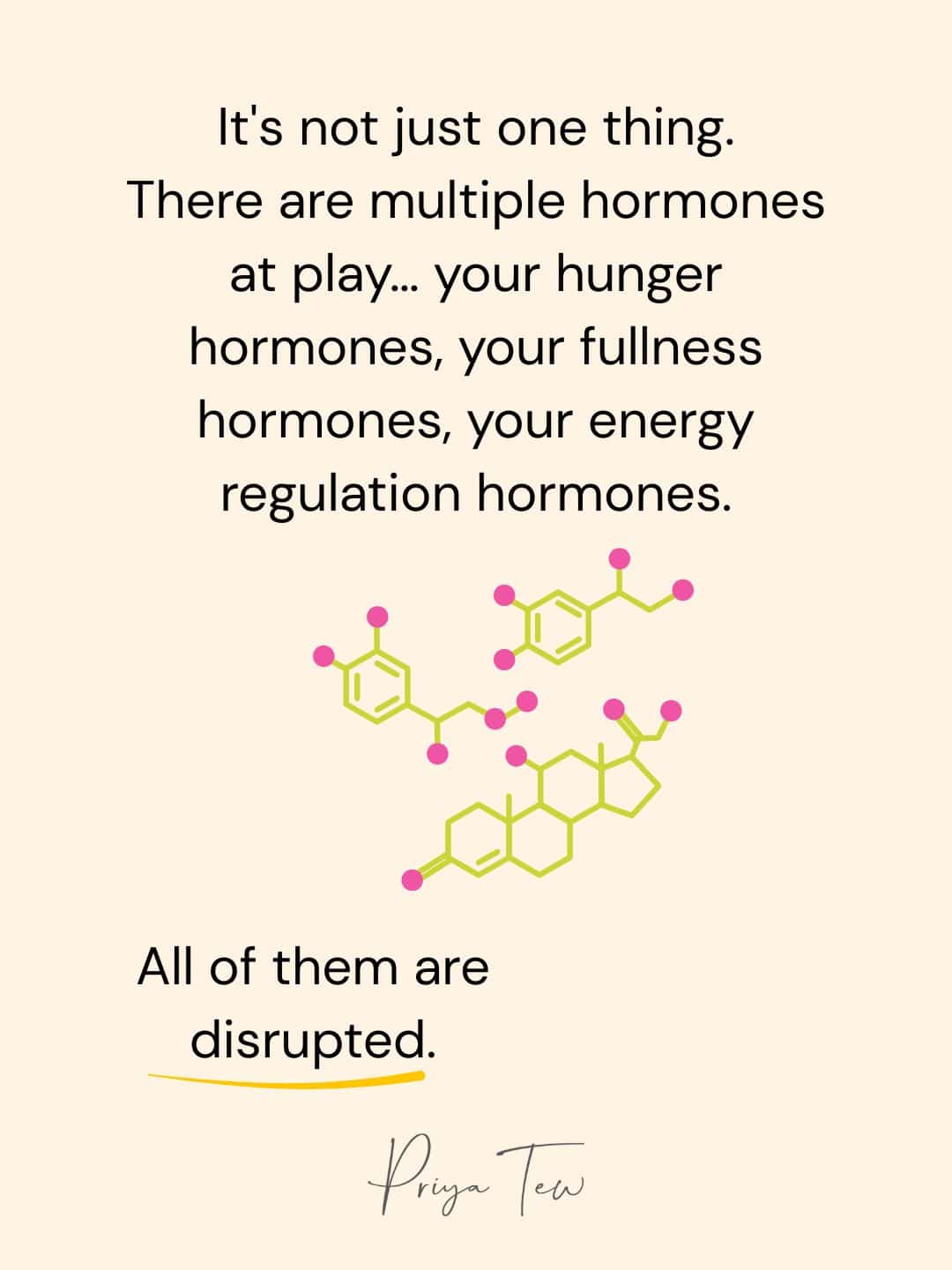
Your body is incredibly sophisticated when it comes to regulating appetite and energy. There is a whole network of hormones working together to signal hunger, promote fullness, and keep your energy stable. In eating disorders, this system has often been disrupted, sometimes for months or years.
Understanding what is happening inside your body can help you trust it again. So let’s look at some of the key players.
Extreme Hunger in ED Recovery: The Hormone Behind Fullness
Peptide YY, often called PYY, is a hormone that helps you feel satisfied after eating. It starts to rise within about fifteen minutes of a meal and peaks over the following one to two hours. It acts on the hypothalamus in the brain, plays a key role in reducing hunger signals, and also slows down your digestive system, meaning food transits slower and you feel fuller for longer.
In people with eating disorders, research shows mixed results when it comes to PYY levels. Some people have higher levels, some lower. The science is still evolving and it is not as simple as one answer fits all. Whilst that sounds confusing, it actually shows how different people have different hormone responses in recovery. Hence not everyone feels the same level of hunger and fullness. But there is a really important finding I want you to hold onto. After one year of recovery, PYY levels normalise. The body heals, it comes back to normal, it fixes itself.
What this tells us is that your hunger and fullness cues are not broken forever. They are recovering, just like the rest of you. I find that really encouraging.
Insulin: Why “Just Listen to Your Body” Is Complicated Advice
Most people think of insulin purely in terms of blood sugar regulation, but it also plays a role in appetite. Research suggests that insulin sensitivity can actually change the reward signal your brain gets from food. This is significant. If chronic restriction has increased your insulin sensitivity, this can blunt your hunger signals and your motivation to eat. In other words, restriction can make it harder to feel hungry, not easier.
This is one of the reasons why extreme hunger in ED recovery can feel so confusing and unpredictable. Your body’s signals may genuinely be dysregulated. They need nurturing, and your body needs to feel safe.
Extreme Hunger in ED Recovery and Your Stress Response
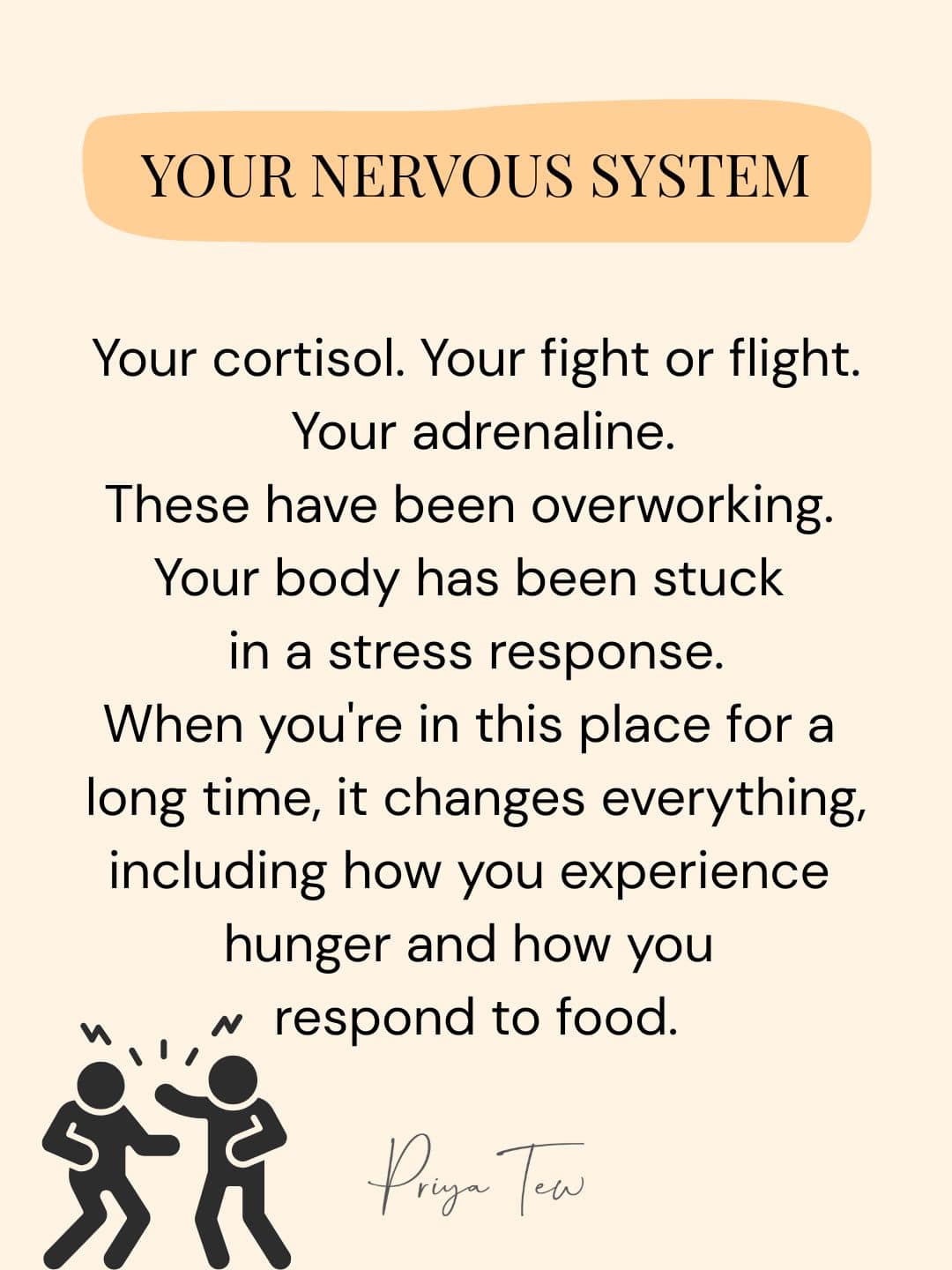
The HPA axis, which stands for hypothalamic-pituitary-adrenal axis, is one of the most important neuroendocrine systems in the body. It regulates your stress response and has a significant influence on appetite and eating behaviour.
When you are stressed, a cascade of hormones is released, including cortisol. And cortisol has a complicated relationship with food. For some people, stress suppresses appetite. For others, stress increases appetite and drives cravings for calorie-dense, high fat, high sugar foods. This is not a character flaw or a lack of willpower. It is your stress hormones influencing your food preferences.
Research has found that a dysregulated HPA axis, one that is overactive or stuck in a stress response, is linked to eating disorders. People with anorexia and bulimia show elevated cortisol levels in both blood tests and saliva samples. These raised cortisol levels can work in two directions. They can contribute to restriction by reducing appetite and motivation to eat. Or they can drive binge episodes by increasing cravings for highly palatable food. The good news is that these elevated cortisol levels do reduce with regular nourishment. with the mindfulness work and with the having enough. Your stress response system can heal.
But what I find fascinating here is how key it is to work on the nervous system. So many people I work with are stuck in fight or flight, and a massive part of recovery is calming the whole system down. All that breathwork, mindfulness, craft, jigsaws (which I know can feel useless, a waste of time, demeaning), well they help calm the stress response. So this is key as is can therefore impact how you feel, your appetite, and your desire to eat. I think this shows how recovery is not just about food. It really is about the whole person and that is part of how I work as a dietitian, helping people. We focus on the nutrition, but also the nervous system and the thoughts, feelings and beliefs.
So Why Does Extreme Hunger in ED Recovery Happen?
When you begin to nourish your body consistently, several things start to happen at once. Your hormonal systems begin to recalibrate. Your brain’s reward pathways, which have been altered by restriction or by binge-purge cycles, start to shift. Your body, which may have been running on empty, goes into what I think of as a rebuilding phase.
Extreme hunger in ED recovery is often your body catching up. This can be after months or years of not being properly nourished. It is asking you to replenish not just the physical deficit, but the energy it needs to repair cells, restore hormonal function, regulate your nervous system, and so much more. So you are not needing to just “eat enough” to run your body but you need the extra.
Imagine with me what it would be like to be lost on a desert island, in a place you don’t recognise. To start with you might shout, make signs, try to get someones attention “Help, I’m here” but over time you’d give up on that and just wait or even give up. So then when suddenly someone notices you, what would you do? Shout as loud as you can, set a fire signal ask them to come help you. That’s what your body sometimes does with those hunger signals when you start eating. It wants to make sure you don’t forget again, that you keep going, you don’t stop until it gets what it needs.
This can feel frightening, especially when the eating disorder voice tells you that hunger is dangerous or that you should not trust it. But the research is clear. Your body is not broken. It is recovering AND it will stop. Those hunger signals really will calm down – if you keep eating and nourishing.
What Should I Do?
I have worked with people in eating disorder recovery for almost 25 years now, and extreme hunger is something I see again and again. It is not a sign that something has gone wrong. It is often a sign that something is going right. So please know that it can be normal and the right thing to do is to listen to your body, to lean into those signals and it will calm down.
Your hunger cues may be dysregulated right now, but they can and do recover. The research shows the normalisation of key hormones after sustained recovery. Your body is not working against you. It is asking for what it needs.
Try to honour that. One meal at a time, one day at a time…….
If you are struggling with this, please do reach out for some 1-1 support. You do not have to navigate this alone. I’d be happy to book a discovery call with you to see if I can help. Just email me and we can book that in.
Want some practical support alongside this? Download my free What to Eat in a Day guide, which takes the overwhelm out of eating in recovery and gives you a gentle, flexible framework to work from.